
Why most creators quit too early
And how to stay in the game for years

In his teens, Stephen King began writing stories and submitting them to magazines for publication.
The first was about a man attempting to counterfeit enough “Happy Stamps” to buy his mother a house.
King sent the story to Alfred Hitchcock’s Mystery Magazine.
The rejection slip arrived 3 weeks later. It wished him good luck and gave him one piece of advice.
‘Never staple manuscripts. Use paperclips instead.’
He put a nail in the eaves above his desk and slipped the rejection slip onto it.
When the next rejection slip arrived, it went on the nail too.
By the time King was 15, the nail no longer supported the weight of the rejection slips, and he replaced it with a spike.
The more King wrote, the more rejection slips he received.
After a few more years, some of the slips returned with words of encouragement.
The first read “This is good. Not for us, but good. You have talent. Submit again.”
King needed little encouragement to keep writing, but this was enough.
10 years later, he published his first novel, Carrie. Now, he’s one of the best-known and most successful writers in the world.
What was the secret to King’s success?
Persistence. Each rejection and failure only fueled the next story.
Maybe he had talent, more than most probably, maybe more than all of us.
But talent wasn’t enough on its own. He wasn’t afraid of rejection; he wasn’t afraid of failure.
If he had given up at the first, or even the 20th rejection slip, you and I wouldn’t know his name.
The greatest enemy of success is giving up at the first sign of failure.
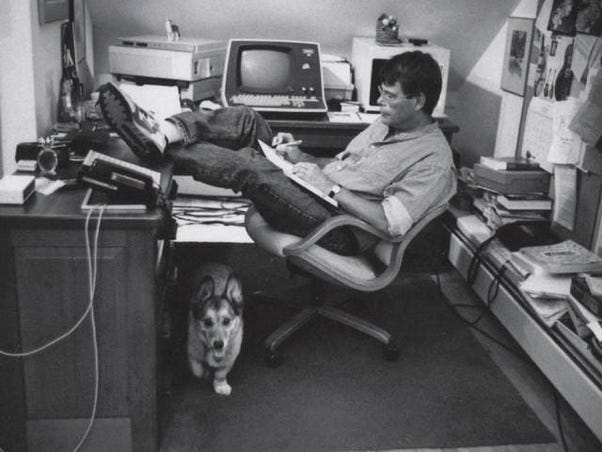
My Version of the Rejection Nail
When I started writing online, I didn’t have a clear direction for where it would take me.
I wrote on Medium for years and made some money from the Partner Program. It wasn’t life-changing, but it felt validating.
Then Medium changed its business model and paid writers pennies.
I still loved writing. But let’s be honest, we all want to get paid.
In summer 2024, I discovered Substack and set up this newsletter. Since then, I’ve grown it to a couple thousand subscribers.
But Substack runs primarily on subscriptions. And subscriptions are a tough business model.
Despite what a lot of gurus would have you believe, growing a paid newsletter is no easy feat.
So I pivoted.
I decided to create digital products instead.
I spent two weeks building my first course. I’d validated demand with a few presales so, I felt confident.
But launch day came and guess what.
I had 4 sales.
Four.
I was crushed.
It felt like a total failure. I had convinced myself this was going to work.
Instead, it was a quiet reminder that building online is humbling.
I took time off Substack in summer 2025 to reassess.
What did I miss? Was my positioning wrong? My messaging? The offer?
But I didn’t stop writing.
That first failed product taught me more than any win could have.
It forced me to improve my offers, understand my audience more deeply, and build with more clarity.
I launched new products and they did better. I tried coaching and loved it.
Why Most Creators Quit
We’re already six weeks into 2026.
How many people who started a newsletter, YouTube channel, or any creative endeavor on January 1st are still going strong?
Look at your local gym. Compare January 3rd to February 15th. The difference is clear.
People don’t fail because they lack potential. They fail because they stop too soon.
Creative work has a brutal phase at the beginning.
You get:
Low views
Low engagement
Zero revenue
And high self-doubt
The effort feels heavy but the rewards feel invisible.
And our brains are wired to abandon activities that don’t produce immediate feedback.
The truth is, creative success compounds.
You don’t get paid for your first 10 pieces. You get paid for your first 200.
The only difference between most successful creators and the ones who disappear isn’t brilliance.
It’s longevity.
The Emotional Cycle of Creation
Every creator goes through the same cycle:
Excitement – “This is going to work.”
Effort – You show up consistently.
Silence – Crickets.
Doubt – “Maybe I’m not cut out for this.”
Decision – Quit or continue.
Most people quit at stage four.
The winners continue to stage six:
Breakthrough – Small signs of traction.
And then the cycle repeats at a higher level.
Understanding this cycle removes the drama. When doubt hits, you don’t panic. You recognize it.
“Oh. This is the part where most people quit.”
And you keep going.
The 90-Day Rule
One of the most powerful things you can do is commit to a timeline. I love 90-day challenges.
Three months is long enough to:
Improve your skills
Test positioning
Adjust strategy
And see early traction
But it’s short enough to feel manageable.
If you commit to uploading 2 videos a week on YouTube, you’ll have 25 videos on your channel in 90 days.
Publish two newsletters a week for 90 days on Substack and you’ll have 25 posts.
That alone puts you ahead of most people who “want to start.”
And there’s the bigger benefit to this: You build the identity of someone who does the work.
Consistency builds identity.
At some point, you stop saying, “I’m trying to be a writer.”
You become one.
If you’re still doing the thing you committed to at the beginning of this year, you’re already ahead.
Keep going.
The results of your efforts may not show themselves now, but they will over time.
The audience, the income and the opportunities come to those who stay long enough to earn them.
I’m launching a paid workshop in early March where I’ll break down the exact strategies for building a Substack that attracts clients not just paid subscribers.
If you’re a coach, consultant, author, or digital product creator, this will be especially valuable for you. You already have expertise. You already have something to sell. What you need isn’t $5/month subscribers.
You need qualified leads.
High-ticket clients.
Buyers who trust you before they ever book a call.
In this workshop, I’ll show you how to turn your Substack into a client-acquisition channel.
If this sounds like something you’d want, vote in the poll below.
If there’s enough interest, we’re making it happen.
Love this post? Please share/restack so others find it too. Thanks.
🫡🫡
Love the emotional cycle of creation part